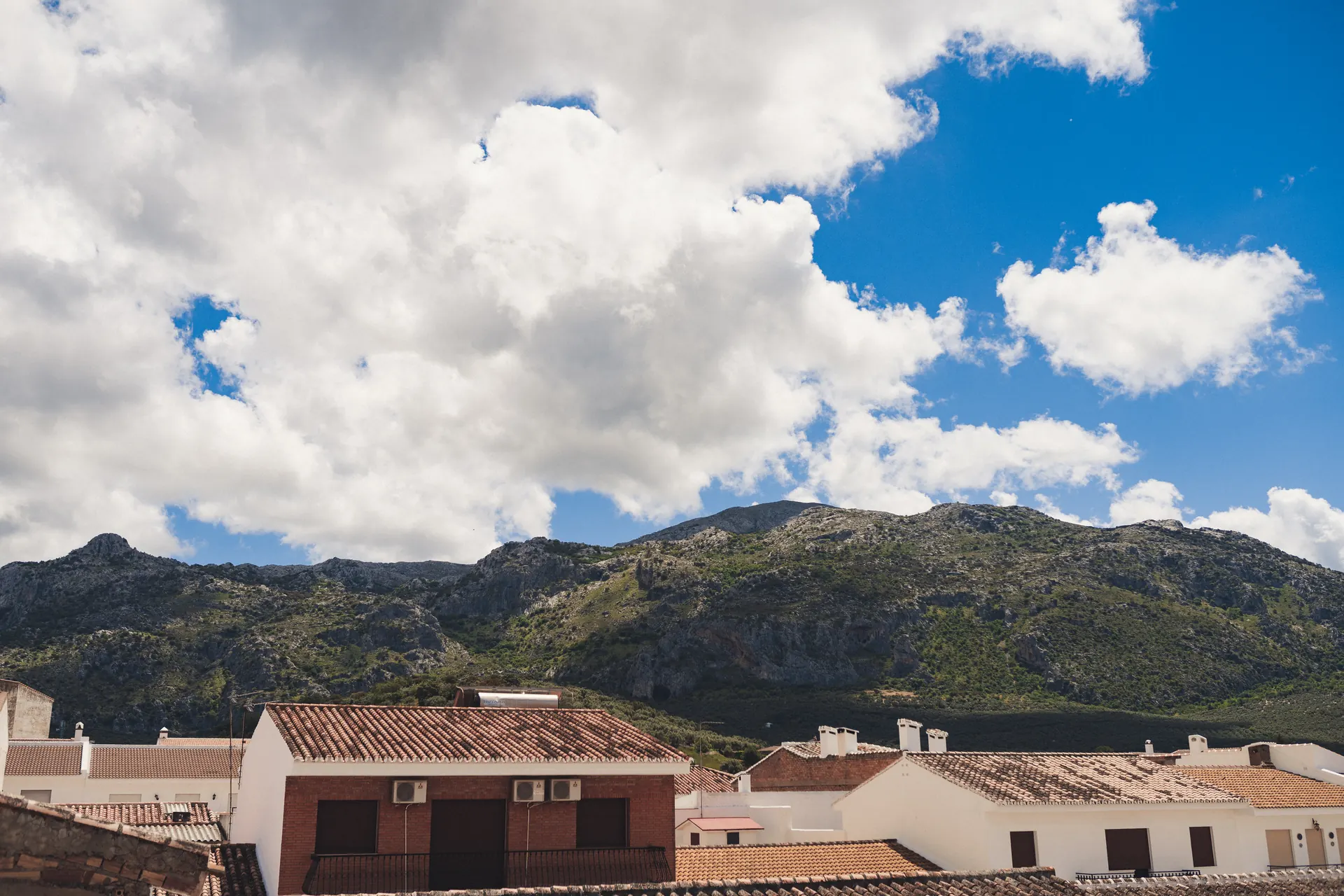
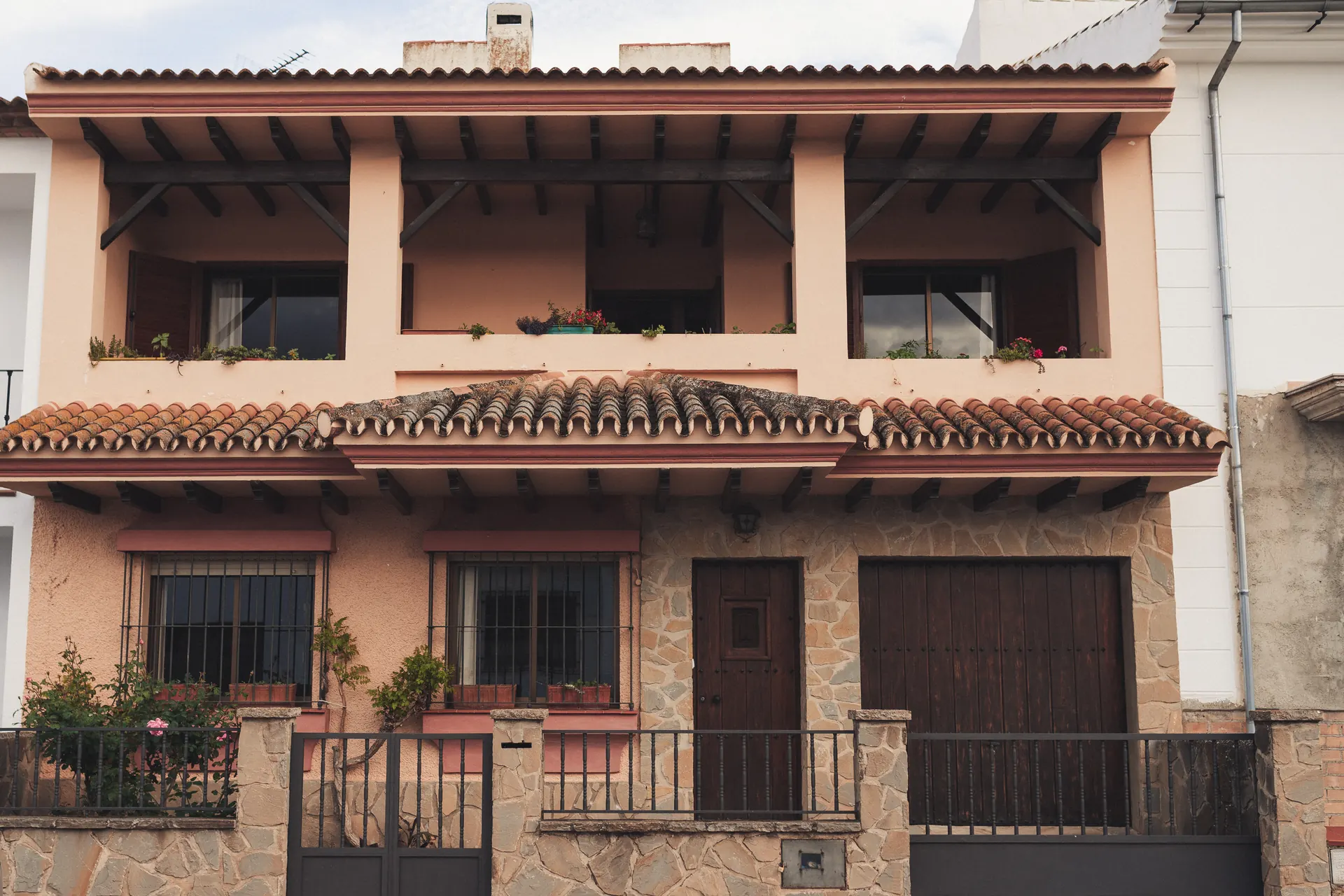
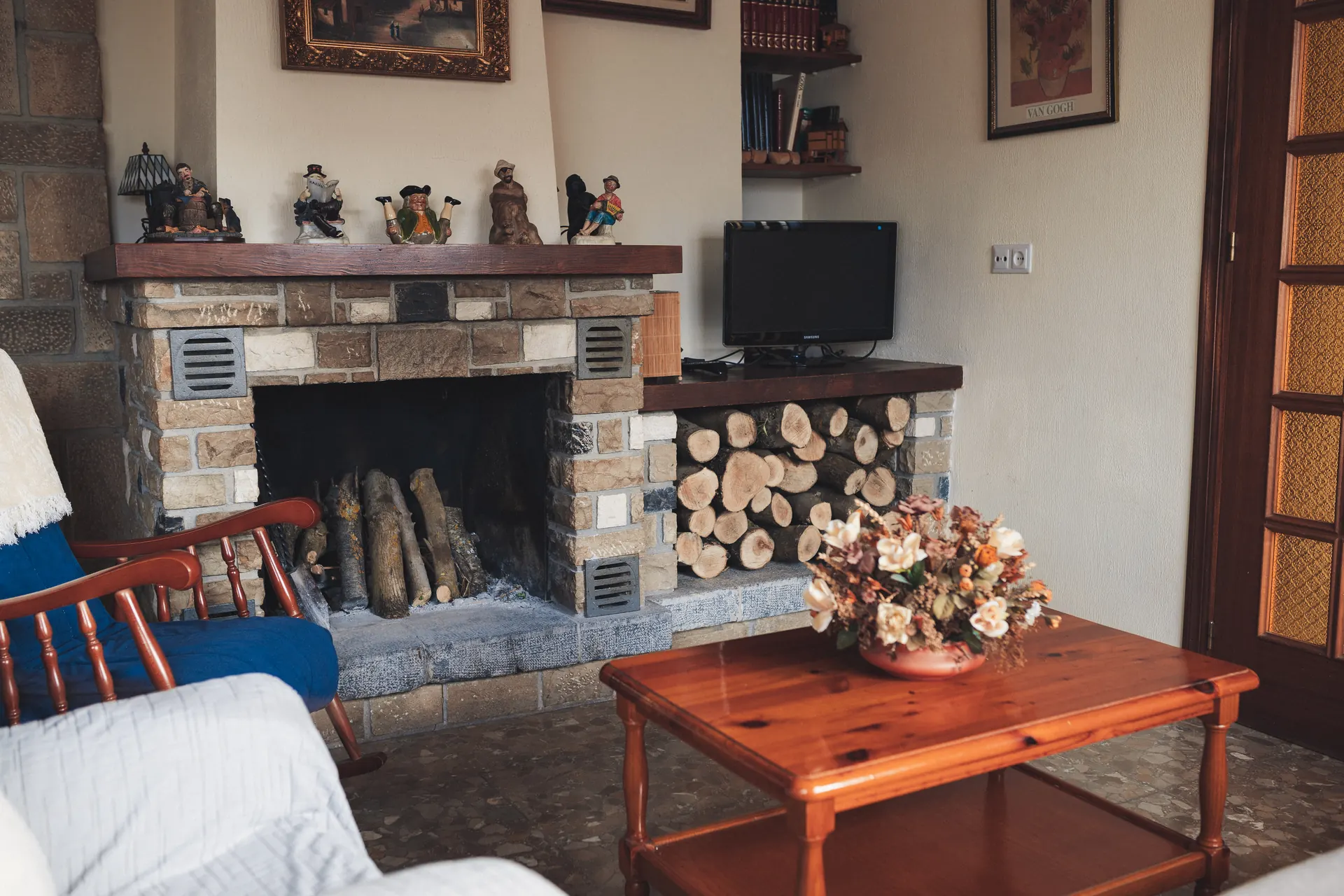
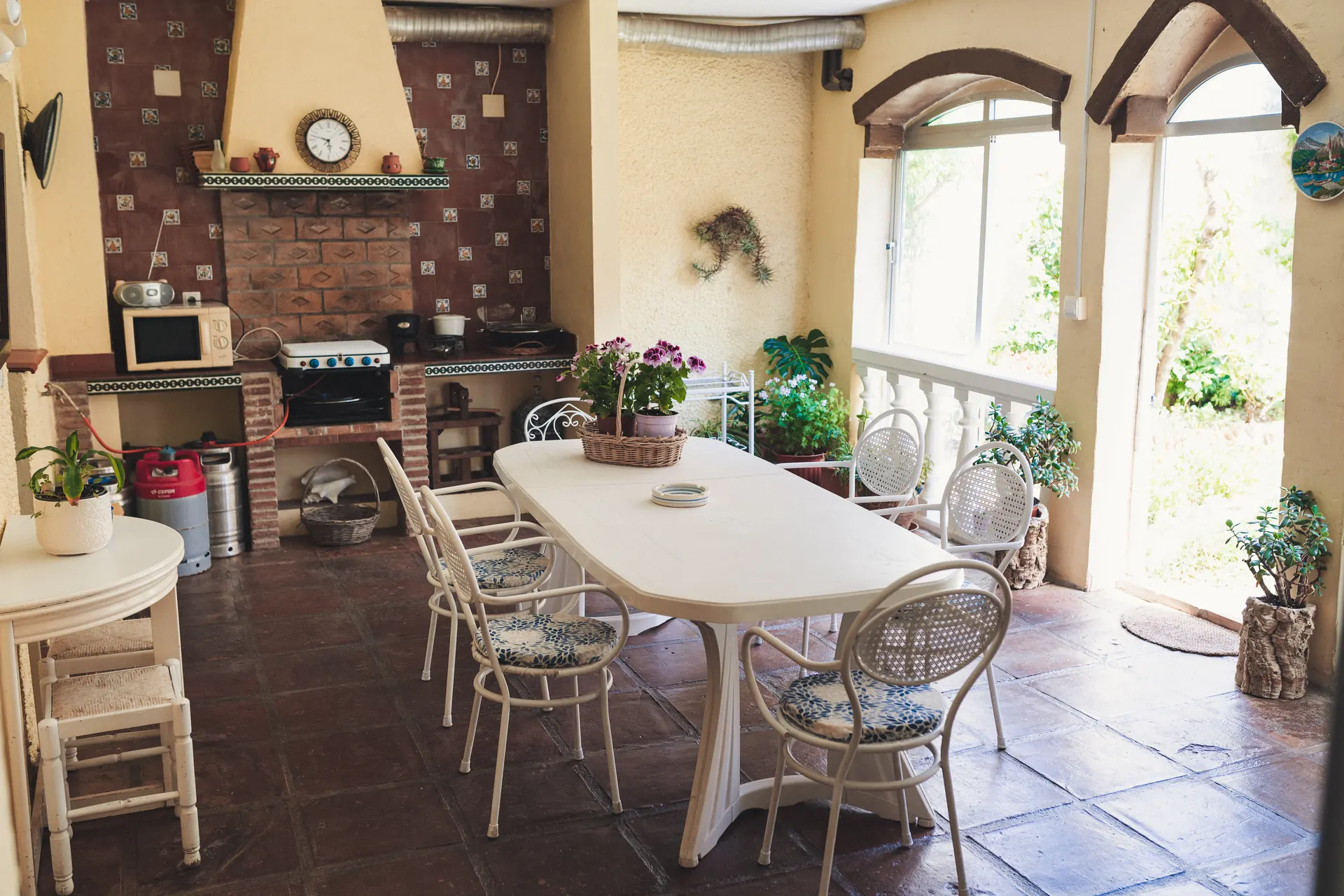
A true white village, some 700 metres up, resting at the foot of the Camarolos and Jobo ranges, where the great limestone arc rises in walls of pale rock above a sea of olive trees. Its whitewashed houses tangle into narrow streets that climb the mountain's skirts, and from almost any corner you can see the peaks —Pico Chamizo touches 1,637 metres— change colour as the day moves on.
It is a quiet, working village of just over three thousand souls, founded in the early 18th century as Puebla del Saucedo, for the willows that grew along its water. And water it has in plenty: a short walk from the centre, El Nacimiento springs straight from the sierra, tumbling in small waterfalls and giving life to the Río Cerezo. Nearby, the rock shelters of Camarolos hide prehistoric paintings and Visigothic burial grounds among the holm oaks.
Here life keeps its own rhythm. Mornings smell of fresh bread and coffee in the plaza; at midday the shutters come down and the village takes its siesta; at dusk neighbours carry chairs out to their doorsteps and the evening stroll fills with greetings. No one is in a hurry, and that calm is contagious.
In the bars around the square the tapa still comes free with the wine, and the cooking is all of the land: olive oil pressed from these very groves, cured meats from the winter matanza —chorizo, blood sausage, loin—, rabbit with rice, wild asparagus and tagarnina thistles from the fields, mushrooms in autumn. On the seventh of October the whole village turns out for the Virgen del Rosario, and in spring the feast of San Marcos sends everyone into the countryside to eat in the open air.
This is no stage set for visitors, no postcard town: it is the authentic, unhurried Andalusia that has all but disappeared — with trails that begin at the last street (the Gran Senda de Málaga long-distance path runs right through) and that becomes your neighbourhood from the very first night.